
Calcification of a shoulder tendon — known as calcific tendinitis — is a very common pathology. It typically affects patients between the ages of 30 and 60. Shoulder pain is generalised, sometimes radiating to the neck or arm.

It is most often a calcification of the supraspinatus, although it may be found on any of the rotator cuff tendons. Strictly speaking, it is not a calcification of the shoulder bone, but a deposit of crystals within one of the cuff tendons. The exact origin of these shoulder calcifications is not known. They are not linked to the food we eat. Shoulder tendon calcifications always eventually clear up on their own. When they evacuate spontaneously, the pain is extremely sharp.
130 PubMed-indexed publications

Treatments and surgery for shoulder calcification

Treatments to consider before surgery

Since shoulder calcification, as noted above, will eventually evacuate spontaneously, the initial approach is to wait.
A corticosteroid injection may be performed before considering treatment of the shoulder calcification. Shockwave therapy is not particularly effective. Overall, physiotherapy has little role to play in cases of shoulder calcification.

Surgery for shoulder calcification

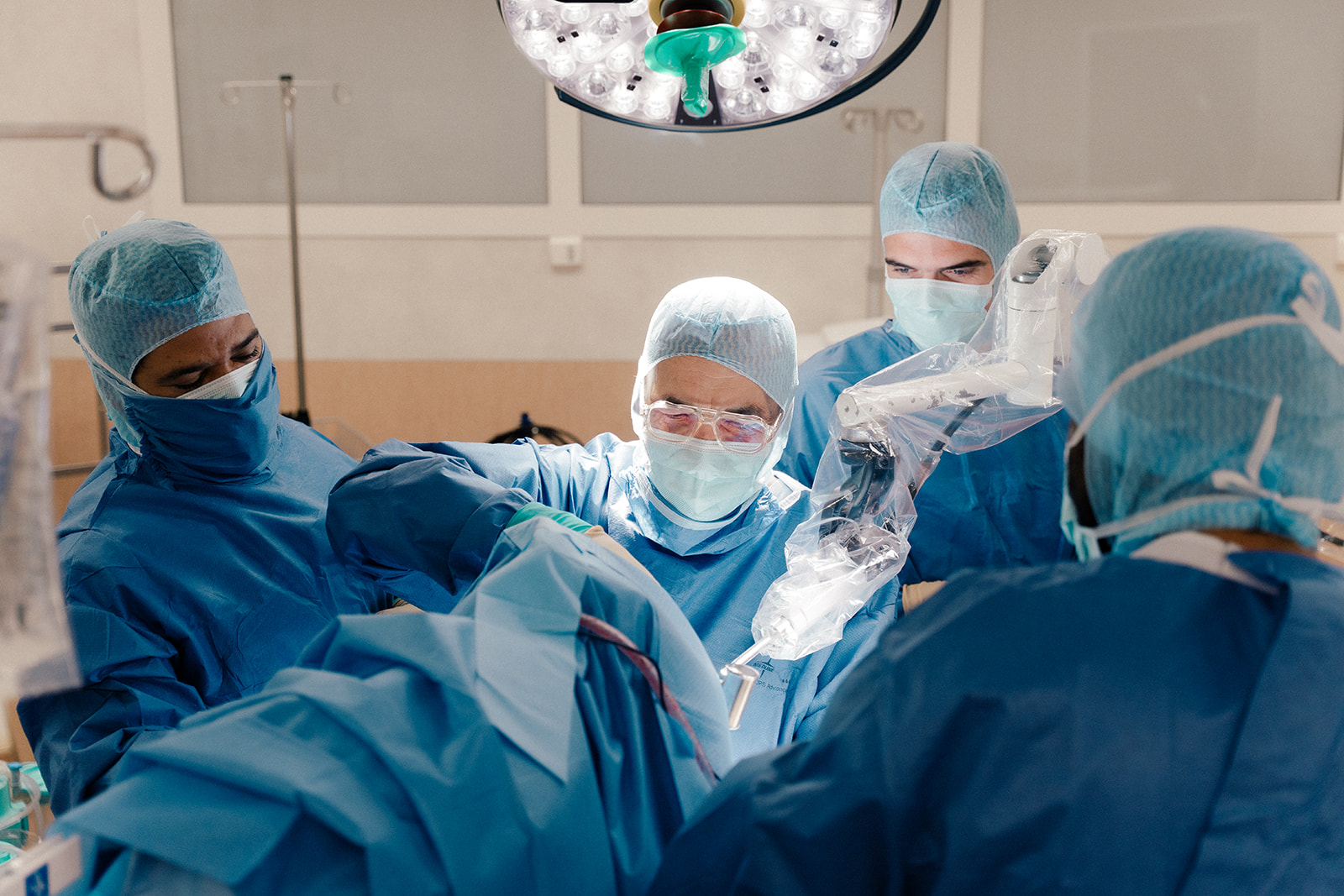
The procedure is performed by a shoulder specialist. The surgeon begins with shoulder arthroscopy, sometimes combined with an acromioplasty, then evacuates the calcification (see video).
Depending on the size of the shoulder calcification, ultrasound-guided evacuation by a radiologist may be proposed.

Course of the procedure

The anaesthetist will begin by numbing the nerves close to the shoulder. Surgery for shoulder calcification is performed under local anaesthesia, as a day case, and you will stay only a few hours at the clinic.

‍

● Minimal use of the arm (= simple daily activities: washing / dressing / meals)

● Arm in a sling for 2 days only

● Self-rehabilitation exercises 1, 2 & 4 to be done 5 times/day

● Maximum 30 minutes of walking per day (no long walks)

N.B.: in 20% of cases the shoulder is stiff and painful at the third week
(early frozen shoulder — an injection is prescribed)

● Lifting of light objects

● Nothing heavy, nothing repetitive, no housework

● Resuming driving

● Self-rehabilitation, all exercises

● Maximum 45 minutes of walking (no long walks)

● Authorisation to gradually resume housework, road / indoor cycling, swimming and walking.

● All self-rehabilitation exercises

Physical activity, lifting, DIY, gardening.

Natural treatment of calcification

The natural treatment for shoulder calcification is time. As we have seen, shoulder calcification will eventually evacuate spontaneously. Patience is therefore essential. We generally wait at least a year and after several shoulder injections before proposing surgery.

Osteopathy plays little role in shoulder calcification itself. However, it can be useful in treating any shoulder pain linked to muscular contractures.

Need more information?

Contact Dr. Collin

Questions fréquentes

Faut-il opérer une calcification de l'épaule ?
Rarement, et jamais en première intention. La calcification finit toujours par s'évacuer seule. On attend en général au moins un an, après plusieurs infiltrations, avant d'envisager une opération.
D'où vient une calcification de l'épaule ?
Il s'agit d'un dépôt de cristaux dans un tendon de la coiffe des rotateurs, le plus souvent le supra-épineux. L'origine exacte est inconnue et n'est pas liée à l'alimentation. Elle touche surtout les patients de 30 à 60 ans.
Quels traitements avant d'envisager une opération ?
D'abord la surveillance, car la calcification s'évacue seule. Une infiltration peut être réalisée ; selon la taille, une évacuation par le radiologue sous échographie est parfois possible. Les ondes de choc et la kinésithérapie ont peu d'effet.
Comment se déroule l'opération de la calcification ?
Le chirurgien réalise une arthroscopie de l'épaule, parfois associée à une acromioplastie, puis évacue la calcification. L'intervention se fait sous anesthésie locale, en ambulatoire : vous ne restez que quelques heures à la clinique.
Quelle est la récupération après l'intervention ?
Bras en écharpe 2 jours seulement, reprise de la conduite entre la 4e et la 6e semaine, puis reprise progressive du ménage et du sport. Dans environ 20 % des cas, une raideur douloureuse (début de capsulite) apparaît vers la 3e semaine et justifie une infiltration.

Frequently asked questions

Should a shoulder calcification be operated on?
Rarely, and never as a first-line treatment. A calcification always eventually clears on its own. We generally wait at least a year, after several injections, before considering surgery.
What causes a shoulder calcification?
It is a deposit of crystals within a rotator cuff tendon, most often the supraspinatus. The exact cause is unknown and is not linked to diet. It mainly affects patients aged 30 to 60.
What treatments are tried before surgery?
First, watchful waiting, as the calcification clears on its own. An injection may be performed; depending on its size, ultrasound-guided evacuation by a radiologist is sometimes possible. Shockwave therapy and physiotherapy have little effect.
How is the calcification operation performed?
The surgeon performs a shoulder arthroscopy, sometimes combined with an acromioplasty, then evacuates the calcification. It is done under local anaesthesia, as a day case: you stay only a few hours at the clinic.
What is recovery like after the procedure?
Arm in a sling for just 2 days, driving resumed between the 4th and 6th week, then a gradual return to housework and sport. In about 20% of cases, a painful stiffness (early frozen shoulder) appears around the third week and warrants an injection.

الأسئلة الشائعة

هل يجب إجراء عملية جراحية لتكلّس الكتف؟
نادرًا، وليس أبدًا كخيار علاجي أول. فالتكلّس ينتهي دائمًا بالزوال من تلقاء نفسه. وننتظر عادةً سنة على الأقل، بعد عدة حقن موضعية، قبل التفكير في الجراحة.
ما سبب تكلّس الكتف؟
هو ترسّب بلورات داخل أحد أوتار الكفة المدورة، وغالبًا ما يكون الوتر فوق الشوكي. والسبب الدقيق غير معروف، ولا علاقة له بالنظام الغذائي. ويصيب بشكل خاص المرضى الذين تتراوح أعمارهم بين 30 و60 عامًا.
ما العلاجات الممكنة قبل التفكير في الجراحة؟
أولًا المراقبة، لأن التكلّس يزول من تلقاء نفسه. ويمكن إجراء حقنة موضعية، وحسب حجم التكلّس يمكن أحيانًا أن يقوم طبيب الأشعة بتفريغه بتوجيه الموجات فوق الصوتية. أما العلاج بالموجات الصدمية والعلاج الطبيعي فتأثيرهما محدود.
كيف تُجرى عملية إزالة التكلّس؟
يُجري الجرّاح تنظيرًا مفصليًا للكتف، يُضاف إليه أحيانًا تقويم الأخرم (برد جزء صغير من عظم الأخرم)، ثم يُفرغ التكلّس. وتُجرى العملية تحت التخدير الموضعي، دون الحاجة إلى المبيت: إذ لا تبقى في العيادة سوى بضع ساعات.
كيف تكون فترة التعافي بعد العملية؟
تُوضع الذراع في حمّالة لمدة يومين فقط، وتُستأنف قيادة السيارة بين الأسبوع الرابع والأسبوع السادس، ثم يُستأنف تدريجيًا القيام بالأعمال المنزلية وممارسة الرياضة. وفي نحو 20% من الحالات، يظهر تيبّس مؤلم (بداية التهاب المحفظة اللاصق) في حدود الأسبوع الثالث، ويستدعي ذلك حقنة موضعية.

Perguntas frequentes

É preciso operar uma calcificação do ombro?
Raramente, e nunca como primeira opção. A calcificação sempre acaba sendo eliminada sozinha. Em geral, espera-se pelo menos um ano, após várias infiltrações, antes de considerar uma cirurgia.
De onde vem a calcificação do ombro?
Trata-se de um depósito de cristais em um tendão do manguito rotador, na maioria das vezes o supraespinhal. A origem exata é desconhecida e não está relacionada à alimentação. Afeta principalmente pacientes de 30 a 60 anos.
Quais tratamentos antes de considerar uma cirurgia?
Primeiro, o acompanhamento, pois a calcificação é eliminada sozinha. Pode ser feita uma infiltração; dependendo do tamanho, às vezes é possível a remoção da calcificação pelo radiologista, guiada por ultrassom. As ondas de choque e a fisioterapia têm pouco efeito.
Como é feita a cirurgia da calcificação?
O cirurgião realiza uma artroscopia do ombro, às vezes associada a uma acromioplastia, e depois remove a calcificação. A cirurgia é feita sob anestesia local, em regime ambulatorial: você fica apenas algumas horas na clínica.
Como é a recuperação após a cirurgia?
Braço na tipoia por apenas 2 dias, volta a dirigir entre a 4ª e a 6ª semana e, depois, retomada progressiva das tarefas domésticas e dos esportes. Em cerca de 20% dos casos, surge uma rigidez dolorosa (início de capsulite) por volta da 3ª semana, o que justifica uma infiltração.