Arthroscopic surgery: the Bankart technique
When shoulder dislocations become too frequent, surgical treatment is required. A shoulder arthroscopy is then performed to repair the labrum and reinforce the ligaments. This procedure is called a Bankart repair of the shoulder. However, when there is bone damage — known as a bony Bankart lesion — arthroscopic surgery gives poorer results. In such cases, a shoulder bone-block (buttée) is preferred.
Bone-block surgery: the Latarjet procedure
A dislocated shoulder sometimes causes lesions (bony Bankart lesions). In such cases, a shoulder bone-block is very often proposed. A small bone fragment (coracoid bone-block) is harvested and placed where the bone has been lost. This bone-block procedure is called the Latarjet operation, described more than 50 years ago by a Lyon-based surgeon, Michel Latarjet. The procedure delivers very good long-term outcomes.
Course of the procedure
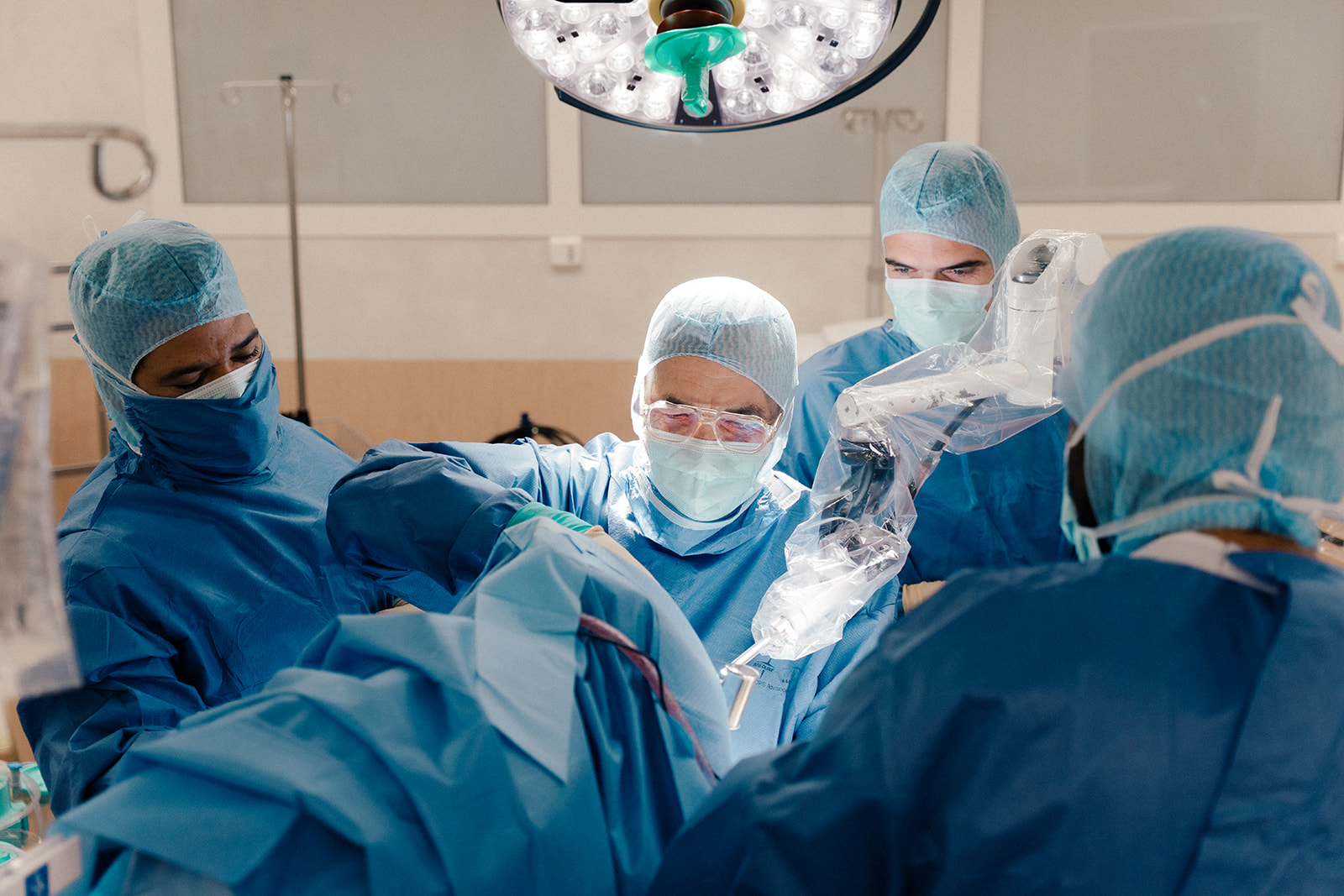
Whether for a Latarjet procedure or a Bankart shoulder repair, surgery is performed as a day case under local anaesthesia alone or combined with a general anaesthetic. Overall, you arrive in the morning and leave in the middle of the afternoon.


.jpeg)


.svg)
.svg)