

Adhesive capsulitis of the shoulder — commonly known as frozen shoulder — is a very common pathology. It is one of the most frequent reasons for consultation for shoulder pain. As we will see, the prognosis of frozen shoulder is good. In the vast majority of cases, recovery happens naturally. The term “frozen shoulder” is synonymous with adhesive capsulitis of the shoulder.
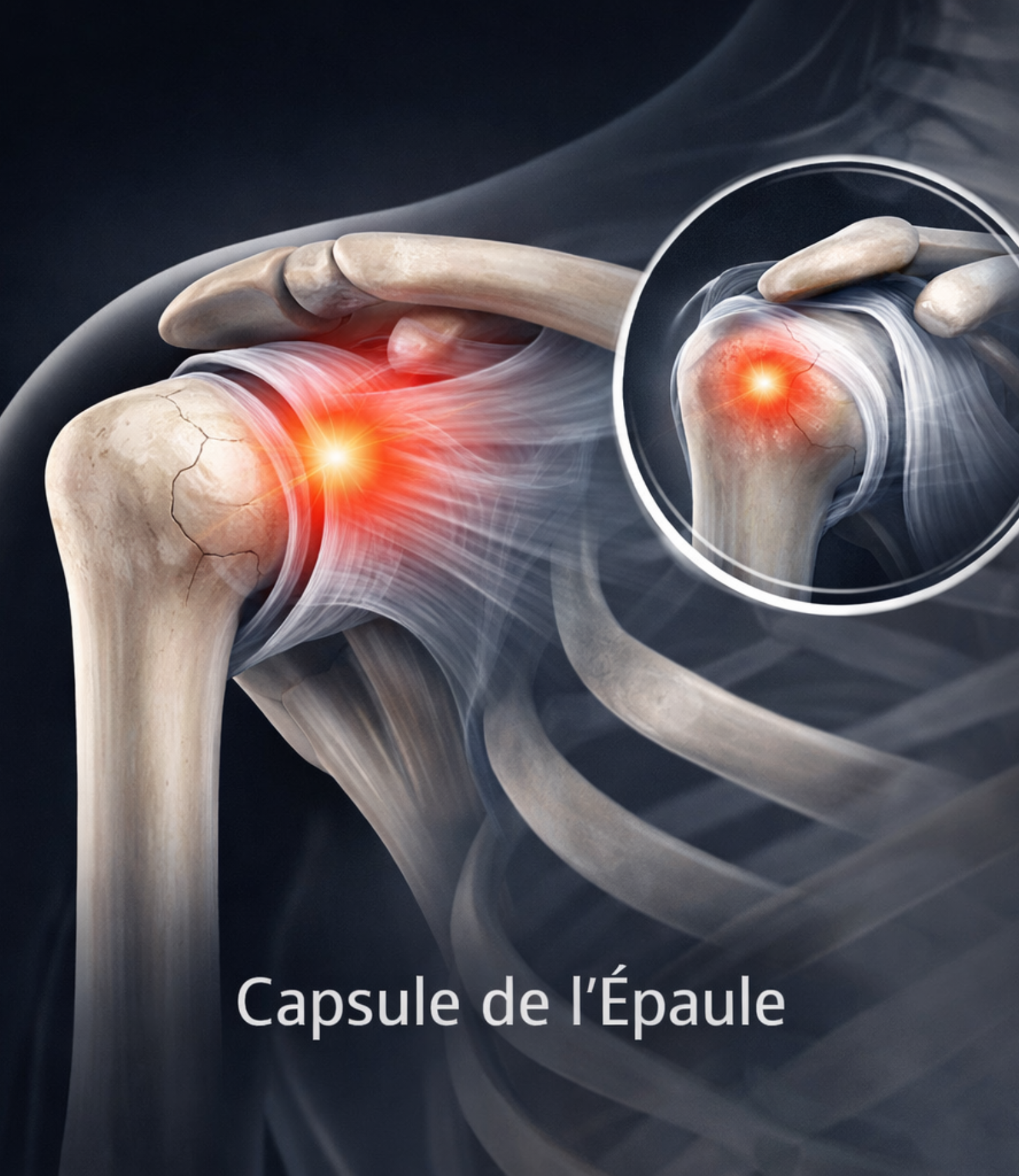
We speak of adhesive capsulitis when there is a loss of both active and passive shoulder mobility. The patient feels as though their shoulder is frozen. Inside the shoulder lies a thin membrane called the capsule. When this membrane becomes inflamed and irritated, the condition is referred to as capsulitis of the shoulder.


Symptoms and causes
The causes of frozen shoulder are not well understood. Adhesive capsulitis of the shoulder more often affects women between the ages of 40 and 60.
The symptoms of frozen shoulder are very typical. Patients experience sharp shoulder pain, particularly during sudden, involuntary movements. This pain is highly characteristic of frozen shoulder.
Treatment by injection
Surgical treatment of frozen shoulder is very rarely required. Once the diagnosis is made, a corticosteroid injection should be performed. This procedure is carried out by a radiologist under ultrasound or X-ray guidance. Rehabilitation then follows, and above all self-rehabilitation exercises performed several times a day. Treatment of frozen shoulder takes time; patience is essential.

It is important to know that frozen shoulder always resolves favourably with time. The natural treatment for frozen shoulder is time itself. A shoulder injection can accelerate recovery, but cases of adhesive capsulitis of the shoulder ultimately heal spontaneously.


.svg)
.svg)