
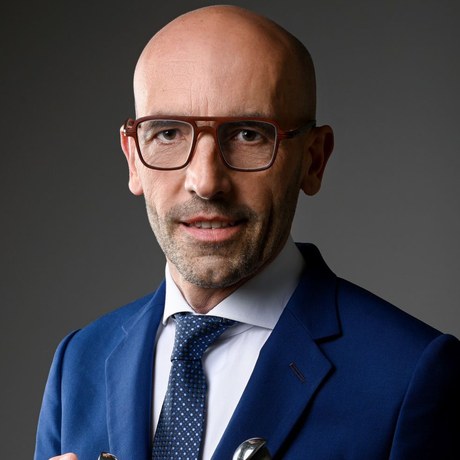
Dr Philippe Collin
Orthopaedic surgeon, shoulder specialist, Paris 16 & Neuilly-sur-Seine
Former President of the SECEC · ranked best shoulder surgeon in Paris (Le Point) · 20,000+ shoulders operated · 130+ scientific publications
A shoulder that slips out of joint, that gives way, or that creates a feeling of apprehension during certain movements: these are the signs of shoulder instability. Common in young people and in athletes, it can be treated very effectively with surgery. Here are the explanations of Dr Philippe Collin, shoulder specialist in Paris.
A dislocation means that the shoulder comes completely out of its joint. After a first episode, particularly in young patients, the risk of recurrence is high: this is known as chronic instability. For a full overview, see our dedicated page on shoulder dislocation.
Beyond the episodes of dislocation, instability causes apprehension (the fear that the shoulder will slip out), a feeling that the shoulder is giving way, and sometimes residual pain. Each new episode can worsen the lesions inside the shoulder joint.
Three reference procedures can stabilise the shoulder:
The choice between the three operations, made after your consultation, depends on the imaging assessment (CT scan, MRI), on age, on the sport practised and on the number of dislocations.
A sling is worn for one to three weeks, and progressive rehabilitation starts immediately after the operation. Return to sport generally takes place between three and six months, depending on the procedure and on the discipline. Dr Philippe Collin has extensive experience with professional footballers: in selected cases, a fast-track recovery protocol can be carried out in close collaboration with the medical staff around the player, with a return to the pitch as early as two months and to competition from three months.
Is surgery necessary after a first dislocation?
Not always. In a young, sporty patient the risk of recurrence is high and surgery may be proposed immediately. The decision is made together with Dr Collin at the first consultation, according to age, activity and imaging findings.
Latarjet or Bankart: what is the difference?
The Bankart procedure repairs the soft tissues arthroscopically, while the Latarjet procedure adds a bone block. The Latarjet is preferred in cases of bone loss or of high sporting demand.
Can you go back to sport afterwards?
Yes, the vast majority of patients return to their sport, including contact sports, after suitable rehabilitation. Dr Collin has published the results of the Latarjet procedure in professional footballers, all of whom returned to the same level.
Do you lose mobility after a Latarjet procedure?
Not at all. Dr Collin carried out a study using motion sensors: six months after the operation there was no loss of mobility compared with the opposite side.
Dr Philippe Collin consults in Paris 16 and Neuilly-sur-Seine, and welcomes international patients. Discover the international patient pathway.





.svg)
.svg)