

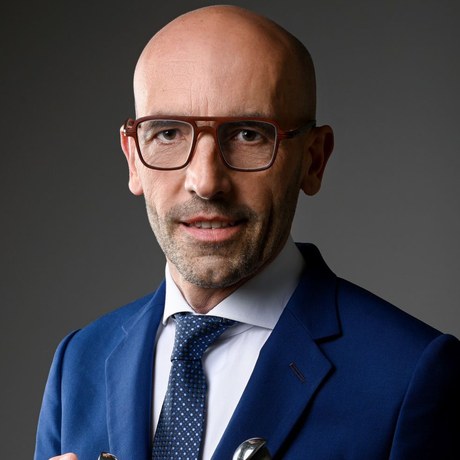
Dr Philippe Collin
Orthopaedic surgeon, shoulder specialist, Paris 16 & Neuilly-sur-Seine
Former President of the SECEC · ranked best shoulder surgeon in Paris (Le Point) · 20,000+ shoulders operated · 130+ scientific publications
Shoulder tendinitis, which doctors now call rotator cuff tendinopathy, is one of the most common causes of shoulder pain. It can affect anyone, and it is not necessarily linked to manual work. Here is an overview of its symptoms, causes and treatment with Dr Philippe Collin, shoulder specialist in Paris.
The rotator cuff is a group of five tendons that cover the head of the humerus and provide the stability and the mobility of the shoulder. When one of these tendons, most often the supraspinatus, becomes irritated and inflamed, this is called tendinitis, or tendinopathy. The tendon may simply be inflamed and thickened, or it may degenerate progressively towards a tear. A common variant is calcific tendinitis of the shoulder, where a calcium deposit forms within the tendon and triggers very painful flare-ups.
Shoulder tendinitis typically causes:
Unlike adhesive capsulitis (frozen shoulder), where the joint becomes stiff in every direction, tendinitis usually preserves good passive mobility.
Contrary to what was long believed, tendinitis is rarely caused by the shape of the acromion. The main contributing factors are age (the tendon weakens over time), repeated overhead activity (painting, DIY, throwing sports, swimming, tennis) and trauma. Left untreated, chronic tendinitis can progress to a rotator cuff tear.
Diagnosis is based first on the clinical examination: Dr Philippe Collin tests your mobility and your strength and reproduces the pain with specific manoeuvres. It is completed by ultrasound and/or MRI, which show the exact state of the tendons, detect any calcification and distinguish simple tendinitis from a tear. An X-ray looks for a calcification or a bony abnormality.
In the vast majority of cases, shoulder tendinitis is treated without surgery:
Surgery is considered only when pain persists despite several months of well-conducted treatment, or in the case of a tendon tear. It is performed arthroscopically (with a minimally invasive camera) and involves decompressing the tendon (acromioplasty), removing a calcification or repairing the torn tendon.
It is advisable to consult Dr Collin if the pain persists beyond a few weeks despite rest, if it wakes you at night, if it is associated with a loss of strength, or after an injury. Early treatment prevents the condition from becoming chronic and reduces the risk of a rotator cuff tear.
Does shoulder tendinitis heal on its own?
Mild tendinitis may improve with rest, but pain lasting more than a few weeks should be assessed to prevent it from becoming chronic and damaging the tendon.
How long does shoulder tendinitis last?
With appropriate treatment (rest, physiotherapy, sometimes an injection), most cases improve within a few weeks to a few months. Calcific forms may flare in episodes.
What is the difference between tendinitis and a rotator cuff tear?
Tendinitis is inflammation or wear of the tendon without a complete tear, whereas a tear is an actual rupture of the tendon. Chronic tendinitis can progress to a tear. Only imaging can tell them apart.
Does shoulder tendinitis require surgery?
No, in the vast majority of cases treatment is medical and based on rehabilitation. Surgery is reserved for pain that resists several months of treatment, or for confirmed tendon tears.
Dr Philippe Collin consults in Paris 16 and Neuilly-sur-Seine, and also welcomes international patients. Discover the international patient pathway.





.svg)
.svg)